
LLM Routing Explained: Cut Cost, Latency, and Waste
LLM Routing is directing a prompt to the best language model for better performance and lower cost.
In other words it is a smart way to send each prompt to the model that fits it best, instead of sending everything to the most expensive option. That matters because simple requests don’t need a premium model, and research on routing systems like FrugalGPT and RouteLLM shows that better model choice can cut costs while keeping quality high. If you use a setup like LLM routing for cost, speed, and reliability, you can match each task with the right mix of speed, price, and accuracy.
Real-World Example: The Smart Customer Support Chatbot
Imagine a massive e-commerce company that uses AI to handle thousands of customer inquiries a day. Instead of sending every single message to the most expensive, powerful AI model, they use an LLM router as a “traffic cop” to analyze incoming prompts and delegate them efficiently.
Here is how the router splits the workload in real-time:
- Scenario A: The Simple Query
- User Prompt: “Where is my order #12345?”
- Router’s Decision: This is a routine, low-complexity task. The router sends it to a small, ultra-fast, and cheap model (like GPT-4o-mini or Llama 3 8B).
- Outcome: The customer gets an instant answer, and the company pays fractions of a cent.
- Scenario B: The Complex Edge Case
- User Prompt: “My package arrived damaged, but my warranty expired yesterday, and I paid using three different gift cards. How do I get a refund?”
- Router’s Decision: This requires advanced logic, policy checking, and nuanced reasoning. The router elevates this to a premium, heavyweight model (like Claude 3.5 Sonnet or GPT-4o).
- Outcome: The customer receives a highly sophisticated, empathetic solution to a tricky problem.
The Bottom Line
By dynamically switching between models based on the difficulty of the question, the company maintains a highly capable chatbot while cutting its overall AI API costs by up to 70%.
For non-technical readers, the idea is simple: use the right brain for the job. For developers and AI teams, it means a practical control layer that can reduce spend, speed up responses, and keep complex workflows on track, especially when different prompts need different levels of reasoning.
LLM routing, explained in simple terms
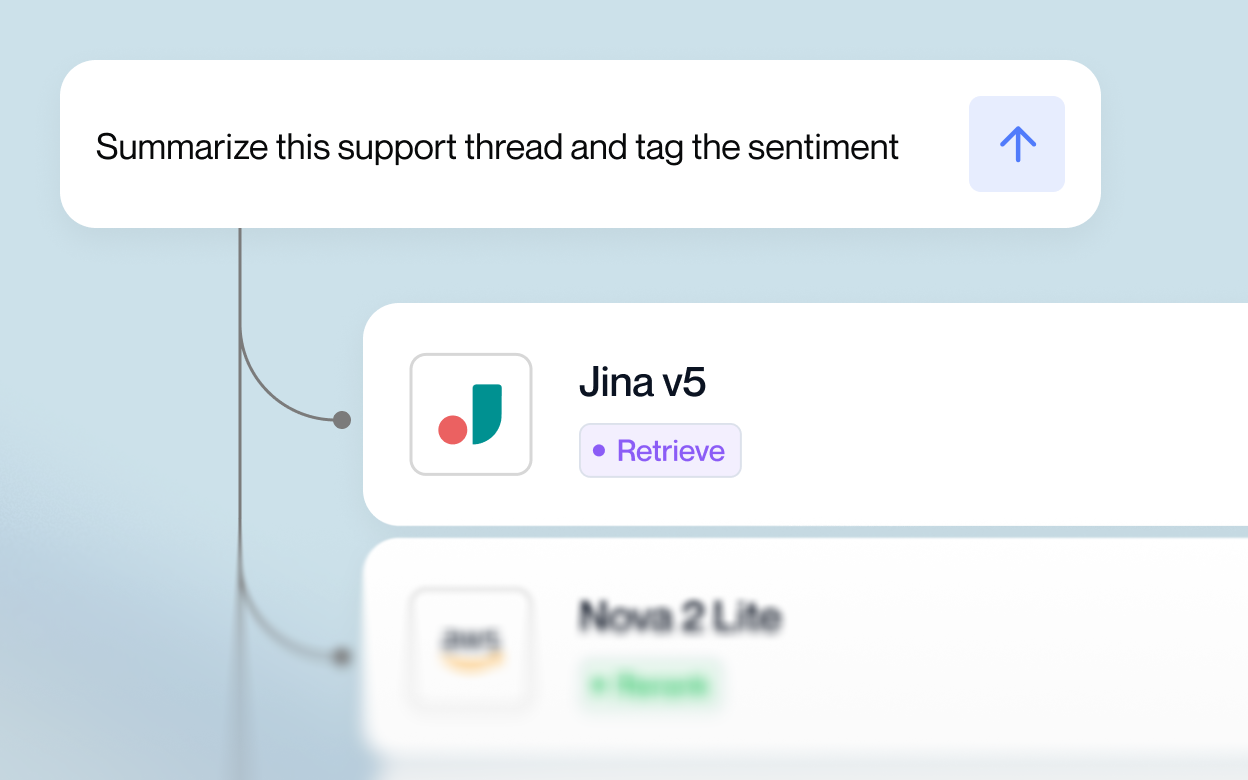
LLM routing is the part of the system that decides which model should handle each prompt. Instead of sending every request to the same expensive model, the router checks the prompt first, then picks the model that fits the job. That keeps simple tasks cheap and fast, while harder tasks still get the extra reasoning power they need.
This matters because prompts are not all alike. A short rewrite request, a support reply, a code fix, and a math problem all need different levels of effort. A good router helps each one land in the right place, which is why routing is now a core piece of many multi-model setups.
### How the router chooses the right model
A router looks at the prompt and pulls out signals that help it judge what kind of work is needed. The simplest signal is prompt length. Short requests often need less horsepower than long, layered ones. But length alone is not enough, so routers also check topic and intent.
Common signals include:
- Topic: Is this code, math, support, writing, or general chat?
- Complexity: Does the prompt need simple completion or multi-step reasoning?
- Confidence: How sure is the router that a smaller model can handle it?
- Domain: Does the request touch law, medicine, finance, or another specialized area?
- Style needs: Does the user want a brief answer, a detailed explanation, or structured output?
Some systems use fixed rules, such as “send code to the coding model” or “send support tickets to a cheaper fast model.” Others use learned classifiers trained on historical examples. More advanced routers use preference data, which helps them predict which model is most likely to give the better answer for a given prompt. RouteLLM, for example, trains routers on human preference data so the system can learn when a stronger model is worth the cost. See RouteLLM’s preference-based routing paper for the research behind that approach.
The best router does not guess from one signal. It combines several signals, then makes a practical choice.
That blended approach is why routing works well in production. A router can send a simple “summarize this email” request to a small model, but route a tricky debugging prompt to a stronger one. In semantic routing setups, the system also compares the meaning of the prompt against known patterns, which helps it handle requests that use different words but mean the same thing.
Why routing is better than sending every prompt to one model
Using one premium model for everything sounds simple, but it wastes money fast. A model built for hard reasoning does not need to spend expensive tokens on basic classification or short rewrites. Research like FrugalGPT showed that smarter model selection can cut cost while keeping performance close to a top model on many tasks.
The reverse also causes problems. If every prompt goes to a weak model, quality drops on the exact tasks that need depth. That creates bad answers, more retries, and more human cleanup. In a workflow with many steps, one weak response can break the whole chain.
Routing solves that tradeoff by balancing three things at once:
- Speed: smaller models often respond faster
- Cost: smaller models usually use cheaper tokens
- Quality: stronger models are reserved for harder work
A simple way to think about it is this: a routing layer is like a traffic cop for model calls. It keeps easy traffic moving, then sends the heavy trucks to the right lane. That reduces waste without forcing every request through the same path.
For teams building agents or support systems, this matters even more. A planning step, a code review step, and a final answer step do not need the same model. Routing lets you match each step to the right backbone, which is why it fits well with LLM gateways and request control. It also helps explain why many teams now compare model pools the same way they compare cloud instances, by cost, speed, and reliability.
In practice, routing is useful for:
- Developers who want model-agnostic apps
- Enterprise teams trying to cut API spend
- Researchers comparing models across the same workload
- AI power users who want better results without overpaying
The main idea is simple. Routing gives each prompt a better chance of landing on the right model, which usually means lower cost, lower latency, and fewer wasted calls.
The main routing strategies used in real systems
Real routing systems usually mix a few different strategies, because no single method works for every prompt. Some teams want the simplest possible setup. Others need smarter decisions based on task type, confidence, budget, or response time.
The common thread is the same: send each request to the smallest model that can still do the job well. Research from Stanford’s FrugalGPT and RouteLLM shows why that matters, since routing can preserve quality while trimming spend. In production, the best choice often depends on how predictable your workload is, how strict your budget is, and how much latency your users will tolerate.
### Static rules and simple fallback paths
Rule-based routing is the easiest place to start. You define fixed paths, then send known task types to known models. For example, short summaries can go to a fast, low-cost model, while code or legal drafting goes to a stronger one.
This setup is quick and easy to manage, especially when the workflow is stable. It also pairs well with smart LLM routing strategies, where teams want a simple control layer without adding much system overhead.
The downside is rigidity. A prompt that looks simple can become hard fast, like a short customer message that turns into a multi-step support issue. Static rules miss those shifts, so they can send a tough request to a weak model and produce a bad answer.
A common variation is cascade routing. The system starts with a cheap model, checks the result, then escalates only if the output fails validation. That can save a lot of money on high-volume apps, but it may add extra latency when the first pass does not work.
Cascades are efficient when the failure check is clear. They slow down when the system needs repeated retries.
In practice, teams use static paths and cascades for:
- Clean, repeatable tasks with known formats
- Basic classification and extraction jobs
- Low-risk workflows where a retry is acceptable
- Fallback handling when a primary model fails
Classifier-based and semantic routing
Classifier-based routing is a step up from hardcoded rules. A small learned model predicts which LLM will do best, often using training data built from human preferences or past wins and losses. RouteLLM is a good example of this approach, because it learns from preference data and routes requests based on which model is more likely to win on that prompt.
That matters when prompt difficulty varies a lot. One request may need only a short answer, while the next may need reasoning, tool use, or careful formatting. A learned classifier can catch those differences better than a fixed rule set.
Semantic routing goes a different way. It groups prompts by meaning, then matches them to patterns or embeddings that point to the best model. So if two questions use different wording but share the same intent, the router can still make the same choice.
A simple way to think about it is this:
| Routing type | What it looks at | Best fit |
|---|---|---|
| Static rules | Fixed task labels | Stable pipelines |
| Classifier-based routing | Learned difficulty signals | Mixed workloads |
| Semantic routing | Meaning and embeddings | Varied user intent |
These methods work well when the system sees a wide mix of prompts. They are especially useful for support, coding assistants, multi-agent systems, and product experiences where the right answer depends on more than a single keyword. For a more technical overview of decision layers and model selection, see LLM failover routing techniques.
Cost-aware routing for budgets and high-volume apps
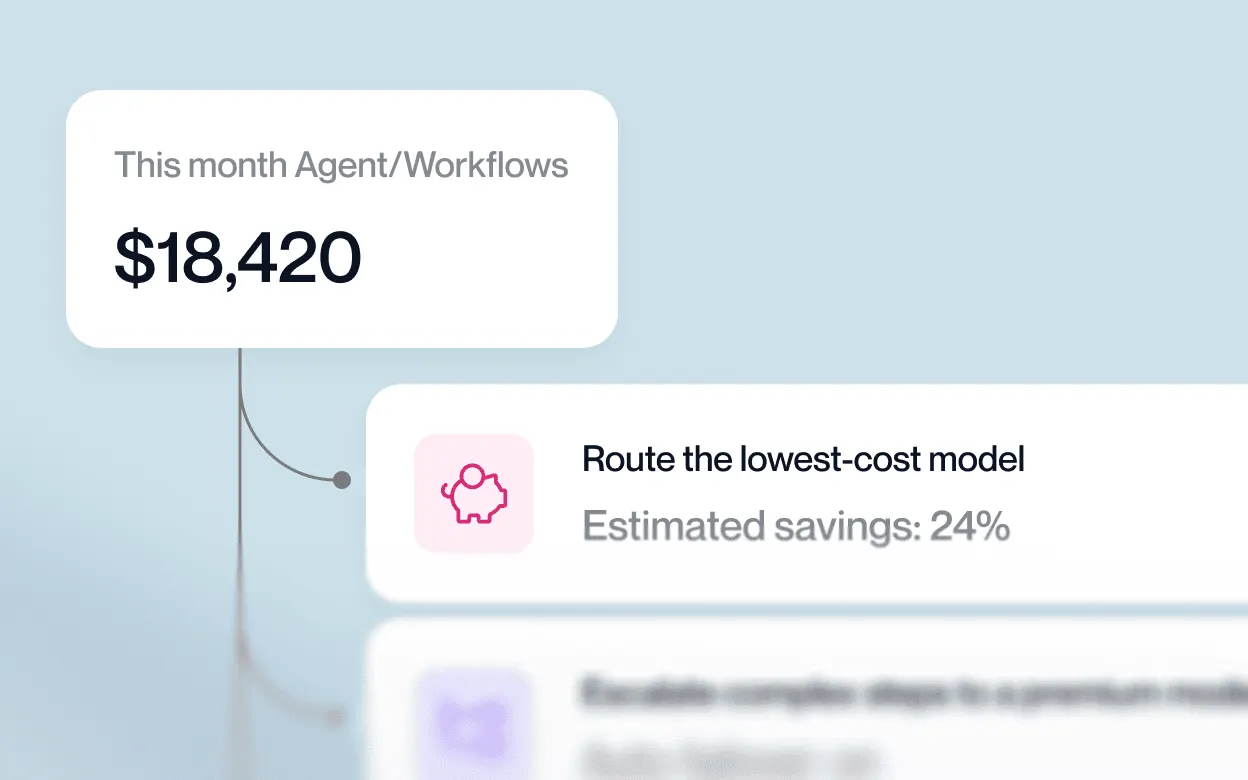
Some routers are built around spending limits first. That means the system does not only ask, “Which model is best?” It also asks, “Which model fits the budget?” Teams can set a daily cap, a per-user limit, or a per-request target, then let the router choose the best option inside that boundary.
This matters a lot for SaaS products and internal tools, where volume adds up fast. A small difference in per-call cost can turn into a real bill when the app handles thousands of requests a day. Cost-aware routing keeps spend more predictable, which helps with pricing, margin, and planning.
It also works well in enterprise apps that need different service levels for different users. A free tier might get a fast, cheaper model. A paid tier or a high-stakes workflow can get a stronger model only when the prompt justifies it.
Common uses include:
- SaaS apps that need stable unit economics
- Internal copilots with clear budget caps
- Enterprise workflows that serve many teams at once
- High-volume support systems where small savings compound quickly
The best cost-aware setups usually track output quality, latency, and spend together. That gives teams a practical way to balance performance against cost instead of guessing. In real deployments, that balance is what keeps routing useful after the first demo.
What research says about cost, quality, and speed gains
Routing studies keep pointing to the same pattern: the biggest model is not always the best first choice. When a system can tell easy prompts from hard ones, it can save money, hold quality steady, and cut wait times at the same time.
That matters for both teams and end users. Developers get lower API bills, operators get more predictable spend, and users get answers faster because simple requests stop waiting behind heavyweight models.
### What FrugalGPT showed about saving money without losing quality
FrugalGPT made the strongest early case for cascade routing and prompt adaptation. The core idea was simple, route each request to the cheapest model that can still do the job well, then save the premium model for the prompts that truly need it. In practice, that means a short summary or label extraction does not need to pay frontier-model prices.
The Stanford work showed that this kind of setup can cut costs sharply, and in some cases it can match GPT-4-level performance or even do a bit better at similar spend. That is the main lesson many teams still use today: quality does not come from always calling the largest model, it comes from matching the model to the task.
For product teams, that can change the unit economics of an AI feature. For example, if a support assistant sends routine classification to a cheaper model and only escalates tricky cases, the total bill drops without forcing users to accept worse output. Research summaries around FrugalGPT and related routing work point to savings in the 40% to 85% range in well-tuned systems, which is large enough to matter in real production budgets.
Why RouteLLM and preference data matter
RouteLLM pushed the field forward by training routers on human preference data instead of only hand-built rules. That matters because people do not judge model quality by token counts or prompt length alone. They care about which answer is actually better, clearer, and more useful.
The practical win is flexibility. RouteLLM showed that learned routers can still work when model pairs change, even when the router was not trained on those exact pairings. That is a big deal for teams, since model catalogs change often and vendor mixes rarely stay fixed for long.
Benchmark results also matter here. RouteLLM reported major cost reductions on tests like MT Bench, MMLU, and GSM8K while keeping strong response quality. The research report for RouteLLM notes cost cuts of more than 2x without a quality drop, which is the kind of result that gets attention in both engineering and finance meetings. You can read the paper on RouteLLM’s preference-based routing results for the full benchmark picture.
For teams that want routing to survive model churn, the message is clear. A router trained on preference data is easier to keep useful than a brittle ruleset that only works for one provider mix.
Where newer systems are pushing routing next
Newer routing systems are moving beyond simple pick-one-model logic. Some use lightweight self-verification, where a small model checks its own output before the system spends more on escalation. That can reduce repeat calls and keep easy tasks from bouncing through the stack.
Others use a two-tier setup, with one model planning and another handling execution. This split works well for multi-step jobs, because the planner can stay focused on task structure while the executor handles the response. In several studies, that pattern improves task completion and lowers the number of frontier-model calls, which is a direct cost saver.
A different line of work ties routing to memory or retrieval. When the system knows a user’s earlier context, or can pull the right source material, it can send more requests to a lighter model and still hold up on quality. That helps especially in long workflows, where latency adds up with every extra call.
The practical payoff is easy to see:
- Fewer API calls when lightweight checks catch bad outputs early
- Better completion rates when planning and execution are split apart
- Lower latency when repeated steps stay inside a smaller model path
- Less waste when retrieval or memory removes the need for a full heavyweight answer every time
For teams that care about failover too, routing and fallback control often go together. If a provider slows down or errors out, systems can shift to another model without breaking the workflow. A good starting point is managing LLM rate limits and fallbacks, since reliability and routing usually need the same control layer.
The best routing systems do more than cut cost. They keep the workflow moving when prompts change, models change, or one provider gets shaky.
Research keeps backing the same direction: route easy work to cheaper models, reserve strong models for hard cases, and use validation to avoid bad retries. That mix gives you better economics without turning every prompt into an expensive call.
Where LLM routing helps the most in real products
LLM routing pays off when a product handles many kinds of requests at once. A support bot, coding assistant, document parser, and analytics agent all need different levels of reasoning, speed, and cost control. Routing keeps those jobs separated, so each prompt gets a model that fits the task instead of a one-size-fits-all answer.
That matters because real products rarely see neat, predictable traffic. One user wants a quick rewrite, another asks for tool use, and a third drops in a long, messy contract. Routing helps teams handle that mix without overpaying for every request.
Software developers and AI engineers
Developers use routing to build model-agnostic apps. That means the app can switch providers without a full rewrite, which keeps the codebase cleaner and makes provider changes far less painful. If one model is better for coding help and another is better for extraction, the router picks the right one per task.
This is especially useful in apps that need different behavior across endpoints. A coding assistant may send debugging prompts to a stronger model, while document parsing, classification, and tool calling can go to faster, cheaper ones. Chat apps also benefit, because users notice latency fast. A short reply from a small model often feels better than a slow answer from a heavyweight model.
Teams that want to set this up can start with the LLM API quick start guide, then grow into more advanced routing patterns as traffic increases. The practical win is simple: one integration, many models, and better control over where each request goes.
Enterprise teams and high-volume businesses
For enterprise teams, routing is mainly about budget control and operational reliability. When request volume climbs, even a small savings per call can protect margins. Research and production writeups on routing often point to cost reductions in the 40% to 85% range when systems send simple jobs to smaller models and reserve stronger ones for harder work. That kind of spread matters when the app handles thousands or millions of requests.
Routing also cuts vendor lock-in. A business does not want its product tied to one provider’s pricing, outages, or rate limits. With fallback support, the system can move traffic if a provider slows down or fails, so the app stays online and the user experience stays steady. Centralized billing and one control panel also make life easier for finance and ops teams, because spend, usage, and reliability live in one place.

For teams comparing router behavior with broader gateway features, TrueFoundry’s LLM router overview gives a useful market view of common enterprise use cases. The bigger point is simple, routing keeps unit economics stable while giving teams more room to scale without rewriting the whole stack.
The strongest enterprise use case is not just saving money, it is avoiding single-provider dependence.
Researchers, benchmarks, and AI power users
Researchers care about fair comparisons. They need to test many prompts, compare outputs across providers, and see which model fits which dataset. Routing helps here because it makes experiments more repeatable. Instead of treating every model call the same way, the router can apply a consistent selection rule and log cost, speed, and quality for each run.
That makes it easier to study tradeoffs across models. One model may win on accuracy, another on latency, and a third on price. Routing platforms make those differences visible, which is useful when you are running benchmark suites, prompt tests, or side-by-side evaluations on the same workload.
It also helps AI power users who care about practical performance. If a workflow mixes math, writing, and tool use, routing can send each prompt to the model that handles that type of task best. In other words, the setup is useful when the question is not “Which model is best?” but “Which model is best for this job, this time?”
For a deeper look at enterprise routing methods and evaluation criteria, see A Multi-Criteria Decision Framework for Enterprise LLM Routing. That kind of research matches what many teams need in practice, a clear way to compare quality, cost, and latency without guessing.
How to think about LLM routing when choosing a platform
Choosing an LLM routing platform is less about picking the most famous tool and more about matching the tool to your workload. The right platform should lower cost, keep latency under control, and give you enough visibility to trust the decisions it makes. If your traffic is mixed, routing can save a lot. If your app only does one thing, a simpler setup may be enough.
Questions to ask before you adopt routing
Start with the workload, because that tells you whether routing will pay off. Ask what kinds of tasks will actually be routed. A support app, a coding assistant, and a document parser do not need the same model mix.
A simple checklist keeps the comparison honest:
- What tasks will be routed? If your prompts vary a lot, routing usually has more value.
- How much savings do you expect? Many teams aim for a meaningful cut in API spend, often in the 60% to 80% range when low-cost models handle routine work.
- Can it work with new or unseen models? This matters because your model pool will change.
- Does it support logs, metrics, and retries? Without those, you cannot see where money or quality is going.
- Is there a proxyless option for sensitive data? That matters for privacy-heavy teams and regulated workflows.
You should also ask how the platform handles failover, cache hits, and latency spikes. Those details decide whether routing stays useful after the pilot phase.
A good router should explain its choices clearly. If you cannot inspect the decision trail, it becomes hard to trust the savings.


Research backs up that concern. Work like RouteLLM’s preference-based routing study shows that routers can generalize beyond the exact model pairs they were trained on. That helps, because most teams do not keep the same provider list forever.
When routing is worth it, and when it may be overkill
Routing shines when your traffic is mixed and your volume is high. If your app handles thousands of requests a day, even small per-call savings add up fast. It also helps when model prices vary a lot, because you can reserve the expensive models for harder prompts and keep routine tasks on cheaper ones.
It is especially useful in these cases:
- High-volume support tools with many repetitive requests
- Multi-step agent workflows where each step has different needs
- Products with tiered pricing, where free and paid users should not cost the same
- Teams that care about vendor flexibility, since routing makes provider swaps easier
Routing is less useful when every prompt is basically the same. A narrow app with low traffic may not need the extra logic. In that case, a single well-chosen model can be simpler and easier to maintain.
That balance matters. A routing layer is not free, and it adds its own complexity. If the app is small, the overhead may cancel out the gains. If the app is growing fast, though, routing often pays for itself through lower spend, faster replies, and fewer wasted calls. Tools like Requesty’s LLM routing guide show why many teams now compare platforms by cost controls, fallback handling, and how much effort they need to operate day to day.
For most teams, the question is not whether routing is useful in theory. The real question is whether your workload is varied enough to justify it. If the answer is yes, choose a platform that gives you clear routing logic, solid observability, and enough flexibility to keep up when your model stack changes.
Conclusion
LLM routing gives each request a better chance of landing on the right model. That usually means lower cost, faster responses, and less quality loss than sending every prompt to the same expensive option.
The clearest lesson from FrugalGPT, RouteLLM, and newer routing research is simple, the best setup matches model strength to task difficulty. For teams building apps with mixed traffic, multi-step agents, or multiple providers, that makes routing a practical part of modern AI infrastructure, not an extra feature.
For developers, enterprise teams, and researchers, the real value is control. LLM routing helps keep spend in check, supports flexible provider choices, and makes AI systems easier to scale without wasting tokens on easy work.