Powered by Recraft
Recraft V4
- Image Generation
Recraft V4 is Recraft’s third-generation image generation model, built around professional design workflows and visual taste, with a focus on photorealism, refined composition, and high-quality raster and vector outputs.
About the model
What is Recraft V4?
Recraft V4 is an AI image generation model from Recraft that produces high-quality, design-focused visuals from text prompts. It is mainly used for professional graphic design tasks such as branding assets, marketing imagery, and layout-ready illustrations, where refined composition, realistic materials, and consistent art direction are important. It is also used for photorealistic renders, character and product visuals, and production-ready imagery that can integrate directly into creative and design pipelines. Recraft V4 belongs to the Recraft image model family as the successor to earlier versions like Recraft V2 and V3 and sits alongside related variants such as V4 Pro and V4 SVG.
Model capabilities
5 Core Capabilities
-
Image Generation
Generates high-quality raster images from text prompts, focusing on visual aesthetics, realism, and prompt adherence for design workflows.
-
Vector Graphics
Creates clean SVG and vector-style graphics, suitable for logos, icons, branding assets, and scalable design elements from text prompts.
-
Design Refinement
Supports iterative refinement of compositions, styles, and layouts to match professional designers’ needs for print, web, and product imagery.
-
Text Rendering
Produces images with legible embedded text, useful for posters, product packaging, social graphics, and other typography-heavy visual designs.

-
Style Adaptation
Adapts to diverse artistic styles, from photorealistic product shots to illustration and flat design, based on prompt instructions and settings.
Use cases
6 Most Valuable Use Cases
- Photorealistic Image Generation
- Product And Packaging Visuals
- Logo And Icon Design
- Marketing Campaign Creatives
- E-commerce Catalog Imagery
- Infographics And Signage
Transparent pricing
Cost Comparison
LLM API offers the lowest cost and fastest access for Recraft V4-compatible image generation.
| Provider | Region | Latency | Throughput | Uptime | Input ($/1M) | Output ($/1M) | Context |
|---|---|---|---|---|---|---|---|
| LLM API BEST | Global | ~750ms | ~120 img/min | 99.99% | $0.0005/img | $0.0005/img | 1 img/request |
| Recraft | Global | ~900ms | ~80 img/min | 99.9% | ~$0.0015/img | ~$0.0015/img | 1 img/request |
| OpenAI (DALL·E-equivalent) | Global | ~1100ms | ~60 img/min | 99.9% | ~$0.0200/img | ~$0.0200/img | 1 img/request |
| Stability AI (Stable Image Core-equivalent) | Global | ~1000ms | ~70 img/min | 99.9% | ~$0.0040/img | ~$0.0040/img | 1 img/request |
| Replicate (Recraft-like model) | Global | ~1300ms | ~40 img/min | 99.5% | ~$0.0060/img | ~$0.0060/img | 1 img/request |
Performance benchmarks
Technical Specifications
| Metric | Recraft V4 | Midjourney V6 | DALL·E 3 |
|---|---|---|---|
| Latency per Image | ~3s | ~10s | ~8s |
| Throughput | ~30 img/min | ~20 img/min | ~25 img/min |
| Max Resolution | 2048×2048 | 2048×2048 | 1792×1024 |
| Price per Image | ~$0.02 | ~$0.04 | ~$0.04 |
| Supported Formats | PNG, JPG | PNG, JPG | PNG, JPG |
| Uptime | 99.9% | 99.5% | 99.5% |
30-day usage via LLM API
- 7.4B
- Prompt tokens processed (30 days)
- 3.1M
- API requests served (30 days)
- 2.6B
- Images & assets generated tokens (30 days)
- 99.8%
- Avg API uptime (30 days)
Architecture & Integration
Why Build on LLM.API?
One unified API. Every major model. Built-in reliability, cost control, and observability.
-
Unified AI Routing
Automatically route each request to the optimal model across providers based on latency, cost, or quality—without changing your integration or redeploying services.
One endpoint, every model -
Cost-Aware Execution
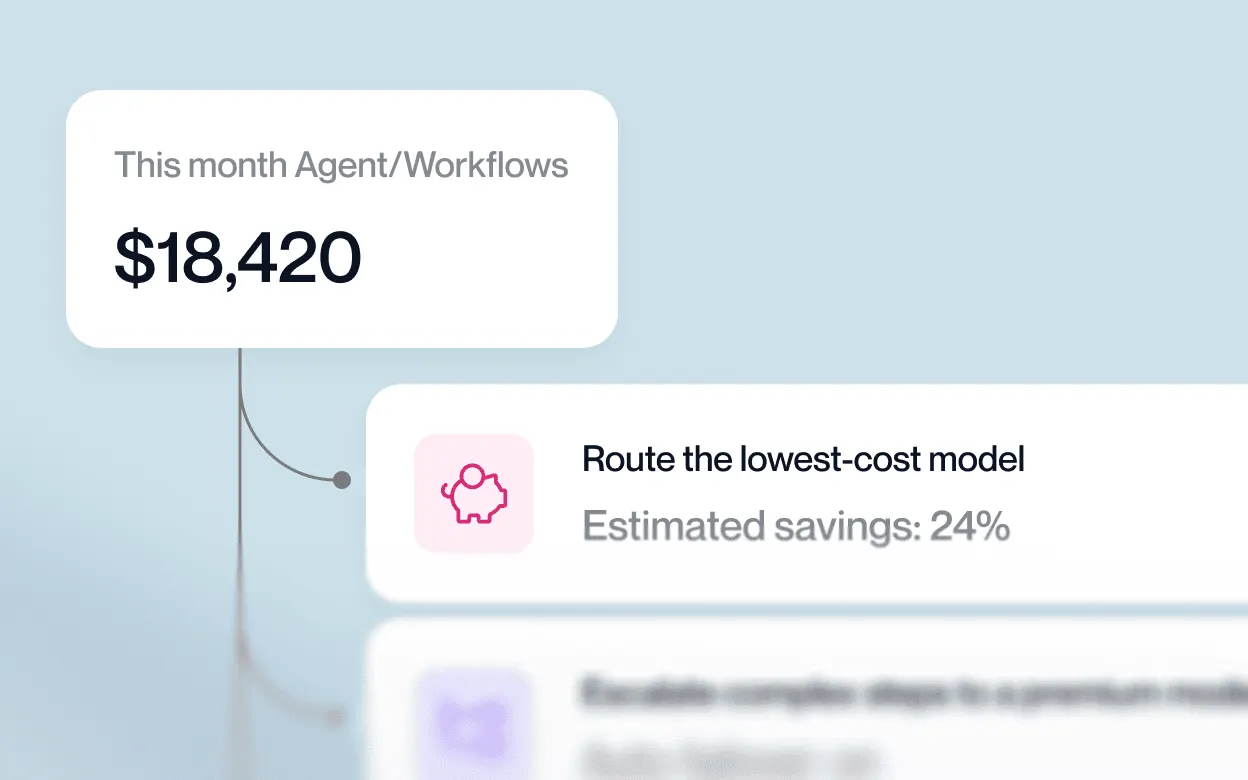
Control spend with per-call cost estimates, smart model selection, and guardrails that keep you within budget while preserving the quality your app requires.
Optimize quality per dollar -
Resilient Fallbacks
Define automatic multi-provider fallbacks so your workloads stay online during outages, rate limits, or model failures—no manual retries, no vendor lock-in.
Stay online, by default -
End-to-End Observability
Get request-level traces, latency and cost breakdowns, and model performance metrics in one place so you can debug faster and tune workloads with confidence.
See every token, everywhere -
Task-Oriented Orchestration
Express complex AI workflows as high-level tasks—tools, memory, multi-step reasoning—while LLM.API handles orchestration, retries, and provider-specific quirks.
Ship workflows, not glue code -
High-Throughput Batch
Run large-scale batch jobs across models and providers with built-in concurrency control, chunking, and resumability to reliably process millions of inputs.
Scale from 10 to millions
Decision guide
When to Use — When NOT to Use
Use it if...
- You need fast generation of high-quality illustrations, icons, and marketing visuals from prompts.
- You need consistent style-preserving image variations or upscaling for design workflows and branding.
- Your use case involves interactive visual ideation, exploring many design options quickly and cheaply.
- You need AI-generated assets for web, mobile app UI, or game concept art.
- Your use case involves batch-generating social media graphics or ad creatives with prompt control.
- You need controllable composition using references, sketches, or styles to refine visual outputs iteratively.
Avoid if...
- You need text, code, or data analysis capabilities rather than purely image-focused generation.
- Your workload requires precise photorealistic human faces with strong identity consistency and verification.
- You need guaranteed copyright-safe training data provenance with detailed enterprise legal attestations.
- Your workload requires multimodal reasoning over documents, charts, or long text plus images.
- You need tightly integrated image editing inside a broader LLM platform with unified governance controls.
- Your workload requires on-premise or fully air-gapped deployment rather than cloud-hosted generation.
FAQ
Frequently Asked Questions
-
What is Recraft V4?
Recraft V4 is an image generation model by Recraft focused on producing high-quality, stylistically consistent visuals from text prompts.
-
What modalities does Recraft V4 support via LLM.API?
Recraft V4 supports text-to-image generation, returning rendered images based on textual prompts through the LLM.API image generation endpoints.
-
How is Recraft V4 typically priced on LLM.API?
Recraft V4 is usually billed per generated image or per resolution tier, with exact pricing defined in LLM.API’s Recraft model pricing table.
-
What is the context window or prompt size limit for Recraft V4 requests?
Recraft V4 accepts relatively short text prompts and prompt metadata, with limits determined by LLM.API’s maximum prompt size for image models.
-
How fast is Recraft V4 in terms of latency?
Recraft V4 typically returns images within a few seconds, with latency varying based on resolution, prompt complexity, and current LLM.API load.
-
How do I call Recraft V4 through LLM.API?
You invoke Recraft V4 by selecting it as the target image model in LLM.API’s unified generation endpoint and passing your text prompt and parameters.
-
What is Recraft V4 particularly good at compared to other image models?
Recraft V4 excels at stylistically rich, design-oriented images, branding assets, and illustrations that require clean lines and consistent aesthetics.
-
How does Recraft V4 compare to similar image models on LLM.API?
Compared to general-purpose models, Recraft V4 emphasizes design quality and style control, while others may prioritize photorealism or broad subject coverage.
-
Does Recraft V4 support image-to-image editing or only text-to-image?
Recraft V4 is primarily optimized for text-to-image; image-to-image or editing capabilities depend on the specific tools LLM.API exposes for this model.
-
What are the main limitations of Recraft V4?
Recraft V4 can struggle with complex multi-object scenes, precise text rendering in images, or highly photorealistic outputs compared to specialized photorealistic models.